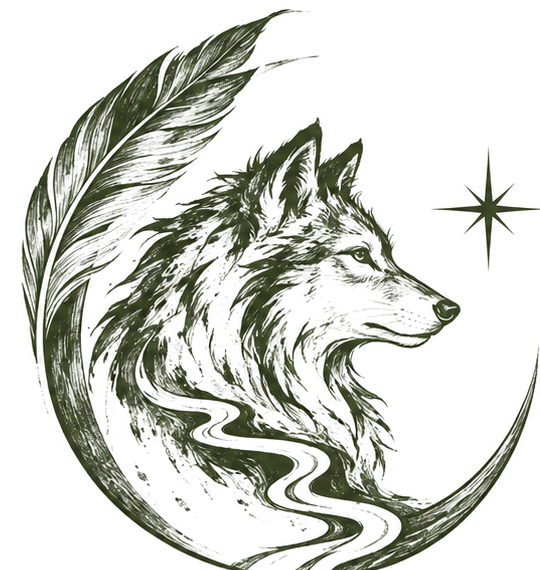
The Dark Night: A Descent into Psyche
When the identities we have built begin to fall away, the way forward may not be toward the light — but deeper into the dark.
There are times in a life when the ways we have known ourselves stop working. The roles we have inhabited feel strangely empty. Beliefs that once held us begin to loosen. Relationships shift. Old grief rises. What once gave us direction no longer seems to know the way.
We may call it crisis. Awakening. Depression. Transition. The dark night of the soul.
But through the lens of depth psychology, we might understand something else taking place: a descent into psyche.
The conscious identity we have built is being confronted by what it could not — or would not — contain.
And this is where the shadow waits. Not as something evil. Not as something to purge. But as something of ourselves that has been left in the dark.
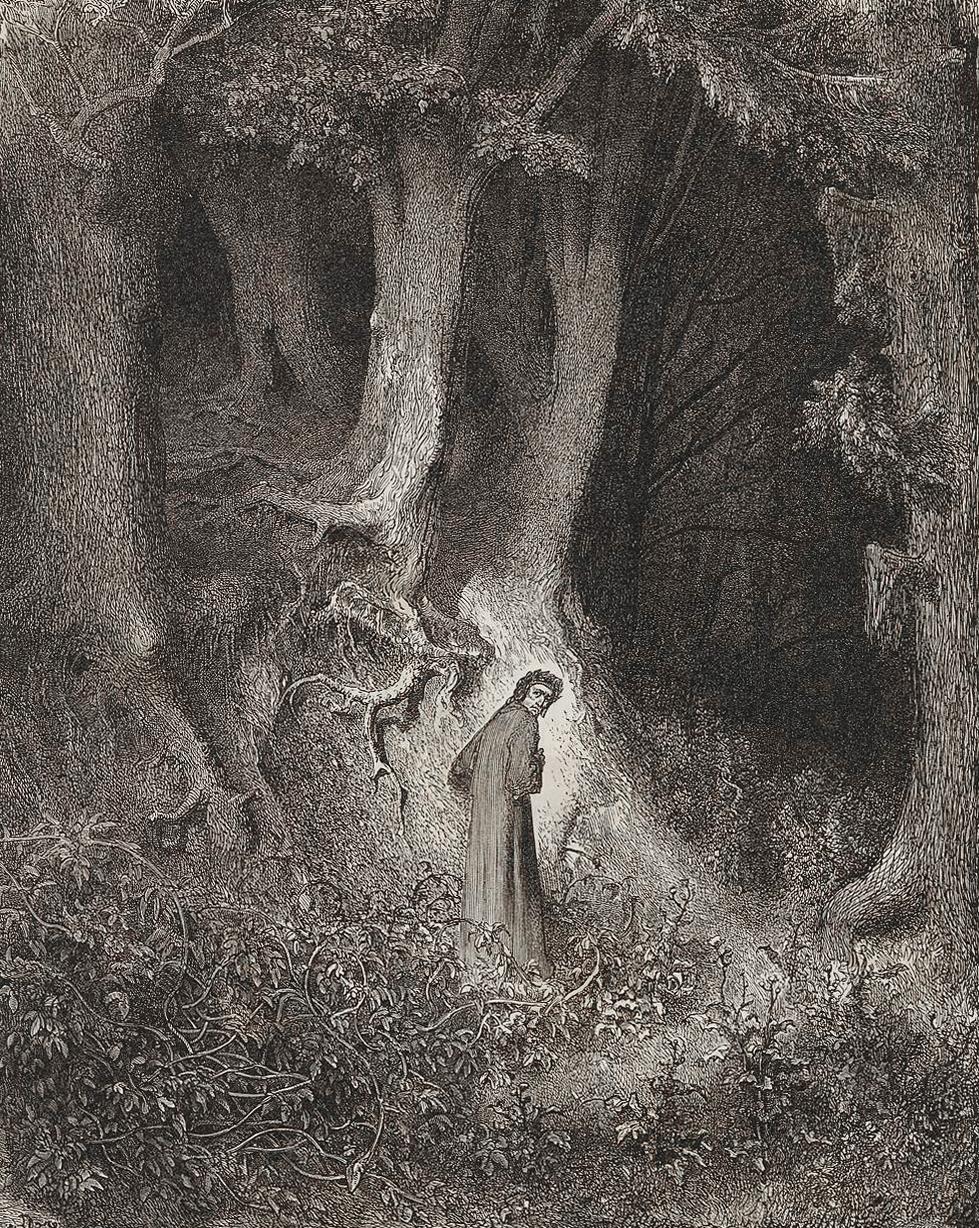
“Midway upon the journey of our life I found myself within a forest dark, For the straightforward pathway had been lost.” — Dante Alighieri, Inferno, Canto I
When the old identity stops working Most of us spend years constructing an identity that allows us to move through the world.
We become the good daughter, the strong one, the caretaker, the achiever, the spiritual one, the rebel, the one who doesn't need anyone. We learn what receives love and what risks rejection. We discover which parts of ourselves belong at the table and which must remain outside the door.
Jung called this social face the persona. We need one. It allows us to participate in the human world.
The difficulty comes when we mistake the face we have learned to wear for the whole of who we are.
Sometimes life itself disrupts that identification. A relationship ends. A career loses its meaning. Children leave home. A belief system cracks open. Someone dies. The body changes. Something we were certain about becomes uncertain. Sometimes nothing obvious happens at all. We simply begin to feel that the life we are living no longer fits. The old maps still exist, but somehow they can no longer tell us where we are. This is often where the dark night begins.
The descent Stories of descent are ancient.
Inanna enters the underworld and is stripped of her garments at its seven gates. Persephone is taken beneath the earth. Orpheus travels into the realm of the dead. Psyche herself is given the impossible task of descending into the underworld.
Again and again, mythology tells us that transformation requires a journey downward.
Yet, there is something here that runs against much of our contemporary spiritual language. We are often encouraged to rise above, transcend, elevate, release, become lighter. But psyche does not always ask us to rise.
Sometimes it asks us to descend.
To go down into the places where our polished explanations no longer work. Into grief. Anger. Fear. Desire. Jealousy. Shame. Loneliness. Instinct. The unlived life. Into the places where we cannot see very far ahead.
This is the territory of the forest at night.
And perhaps part of the initiation is that we cannot bring all of our old certainty with us.
Meeting the shadow The shadow is often spoken about as though it contains everything dark or undesirable within us. But the shadow is more mysterious than that.
It contains what consciousness has excluded. Certainly this can include qualities we would rather not claim: our anger, selfishness, envy, hunger for power, fear or cruelty.
But we also cast beautiful things into shadow. Our creativity. Sensuality. Wildness. Strength. Tenderness. Intuition. Our capacity to say no. Our capacity to say yes.
Anything that threatened belonging or contradicted the identity we learned to inhabit may have been pushed beyond the boundaries of the conscious self.
And it does not disappear. It waits.
Sometimes it appears through projection, arriving in the people who inexplicably fascinate or infuriate us.
Sometimes it comes through the body, through emotion or through patterns we keep repeating despite ourselves.
And sometimes it comes at night...
A wolf appears at the edge of the forest. A stranger enters the house. A child has been forgotten somewhere. A river rises. A door leads into a room we didn't know existed.
Dreams are one of the places where what has been excluded from consciousness can begin finding its way home.
The task is not necessarily to conquer what we meet there. It is to enter into relationship with it.
The temptation to rush toward the light There can be another shadow hidden within spiritual life itself: the belief that darkness means we are doing something wrong.
If we are sufficiently conscious, sufficiently healed, sufficiently aligned, shouldn't we feel peaceful? Shouldn't we have moved beyond anger by now? Shouldn't grief eventually be finished? Shouldn't years of meditation make us less affected by the messiness of being human?
It is tempting to turn spiritual practice into another way of abandoning ourselves.
We can call anger a low vibration rather than asking what boundary it is protecting. We can hurry toward forgiveness before allowing ourselves to acknowledge betrayal. We can speak of detachment when what we are actually afraid of is intimacy. We can try to transcend the body when the body is the very place asking to be heard.
Even the desire to become our “highest self” can carry a subtle rejection of the person standing here now.
But wholeness is not the same thing as perfection.
And individuation is not a project of becoming permanently light.
It asks something more difficult: Can I become conscious of more of what I am?
The Inner Wild This is where I have come to understand shadow work differently. It is not an endless search for what is wrong with us. It is a recovery. Reclaiming our wholeness .. bit by wild bit.
Somewhere beneath the identities we have inherited and constructed lives something less domesticated — an instinctive intelligence that knows before the rational mind has assembled its arguments.
I think of this as the Inner Wild.
Not wildness as chaos or recklessness.
Wild as in belonging to one's own true nature.
The wolf does not need to be taught how to be a wolf. The river does not wonder whether it deserves to follow the shape of the land. A tree reaches toward light while sending its roots deeper into darkness.
Nature does not choose one direction. It moves both ways. Perhaps we don't either.
Rewilding the spirit may therefore have less to do with escaping ordinary human life and more to do with recovering relationship with what we have exiled from it: body, instinct, dream, grief, desire, Nature, silence, mystery.
The parts of ourselves that never stopped knowing, even when we stopped listening.
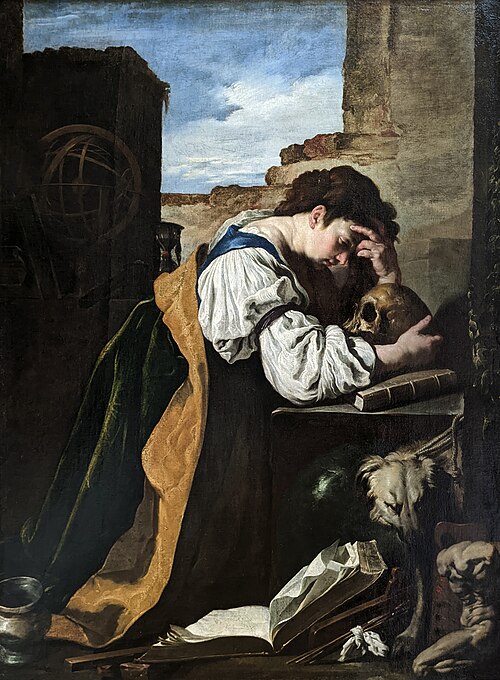
The witness and the depths My years of yogic practice have taught me the profound value of the witness — that quiet awareness capable of observing thought, sensation and emotion without becoming entirely consumed by them.
I still believe this is one of our great inner resources.
But depth psychology has added something important to that understanding for me.
Witnessing what arises is not necessarily the same as entering into relationship with it.
Sometimes the image wants to speak. Sometimes anger has something to tell us. Sometimes the recurring dream is not asking to be observed and released but returned to, questioned, drawn, written about, lived with.
The yogic traditions speak of samskaras — impressions and patterns carried within us that shape perception and behaviour. Jungian psychology offers another language for approaching patterns that operate outside conscious awareness. The languages are not identical. But both ask us, in different ways, to become more conscious of what moves us from beneath the surface.
Perhaps the work is not to choose between witnessing and descending. Perhaps we need both. Enough awareness not to drown in the depths. Enough courage to enter them.
What returns from the underworld? The old stories rarely end in the underworld. But neither does the traveller return unchanged.
This may be one of the most important distinctions between transformation and self-improvement.
The person who returns is not simply a shinier version of the person who descended.
Something has been relinquished. Something has been encountered.
Something previously unknown has been brought into relationship with consciousness.
Jung called the lifelong movement toward greater psychic wholeness individuation.
It is not a straight road toward a perfected or idealized self. It is a continuing conversation between conscious and unconscious, persona and shadow, spirit and body, what we know ourselves to be and what remains unknown.
There may be many descents in a lifetime.
Perhaps that is why the image of the spiral feels truer to me than the ladder. We return to familiar places, but we meet them differently.
The same wound reveals another layer. The same dream image returns with another face. The forest we once entered trembling becomes somewhere we recognize.
And gradually, perhaps, we discover that the darkness was never merely an obstacle between ourselves and the light. It belonged to the landscape too.
Staying with the dark There are forms of suffering that require help, care and support; not every period of darkness needs to be made into a spiritual initiation.
But there are also moments when something in us knows that the old way cannot continue.
In those moments, perhaps the question is not: How quickly can I get out of this?
Perhaps it is: What is asking to be known here? What part of me has been left outside the life I constructed? What keeps appearing at the edge of my dreams? What am I being asked to relinquish? And what might happen if, instead of reaching immediately for the light, I allowed my eyes to adjust to the dark?
The forest has a different life at night. Things emerge that daylight cannot reveal.
Perhaps the dark night asks the same of us. Not that we lose ourselves in darkness. But that we stay long enough to discover what has been waiting there — and bring some part of it back home.