Vedic Astrology & Western Astrology: What’s the Difference?
October 7, 2026 · Christina Erl
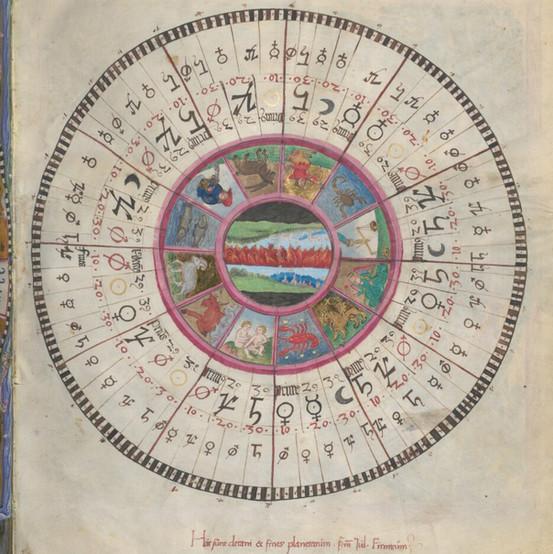
Two traditions looking toward the same sky — through different maps. One of the questions I am most often asked is: Why is my Vedic astrology sign different from my Western astrology sign?
Someone who has always known themselves as a Leo may discover that in their Vedic birth chart, their Sun is in Cancer. A Scorpio Moon may become a Libra Moon. Sometimes the sign remains the same, but its degree changes considerably.
Neither system has simply “gotten it wrong.” Vedic and Western astrology are using two different ways of mapping the zodiac.
Sidereal and tropical astrology Vedic astrology, or Jyotish, traditionally uses the sidereal zodiac, which calculates planetary positions in relation to the stars.
Most contemporary Western astrology uses the tropical zodiac, which is anchored to the seasonal cycle. In the tropical system, zero degrees Aries begins at the March equinox each year.
Long ago, these two zodiacs were much more closely aligned. But because of a slow astronomical movement known as the precession of the equinoxes, their starting points have gradually moved apart.
Today there is roughly a 24-degree difference between the two zodiacs, depending upon the ayanamsha, or astronomical reference point, being used in the Vedic calculation. This is why many planets move into the previous sign when someone first sees their Vedic chart.
But this difference is only the beginning.
Jyotish looks more deeply into the sky
The twelve zodiac signs — known as Rashis in Sanskrit — are only one layer of Vedic astrology.
Jyotish also divides the zodiac into 27 Nakshatras, sometimes called lunar mansions. Each Nakshatra spans 13°20′ of the zodiac and is divided again into four padas, creating 108 smaller divisions of the sky.
The Moon moves through approximately one Nakshatra each day.
For me, this is where Jyotish begins to reveal some of its extraordinary subtlety. Two people may have planets in the same Rashi and yet experience those placements quite differently because they fall within different Nakshatras.
The sky becomes less like twelve fixed boxes and more like an intricate field of pattern. Astrology as a language of cycles and psychology.
Jyotish also works extensively with Dashas — planetary periods that describe different seasons of a human life.
Rather than looking only at the birth chart as a fixed portrait, the Dasha system asks another question: Which planetary archetype is coming forward now?
Different chapters of our lives emphasize different themes. There are periods of expansion and contraction, relationship and solitude, building and relinquishing, movement and stillness.
This is one of the reasons I think of astrology less as prediction and more as a way of understanding our relationship with time.
The birth chart may describe the constellation that is you in the sky at the moment of birth, but we continue moving through a living cosmos.
So which astrology is right? I don't think this is the most interesting question.
Western and Vedic astrology developed into distinct traditions with their own languages, techniques and philosophical foundations. Both can offer meaningful ways of reflecting upon human experience.
My own practice is rooted in Jyotish, the Vedic tradition of astrology, because its relationship with Nature, its astronomical accuracy, its expansive context of the great cycles of time known as yugas and the movement of the planets resonates deeply with the way I understand the world.
The Sanskrit word Jyotish is often translated as “the science of light.”
For me, astrology is not about allowing the planets to determine who we are or what will happen to us. It is a way of illuminating patterns — the tendencies, gifts, shadows and cycles moving through a life.
The chart becomes a mirror.
And sometimes, when we can see the pattern more clearly, we discover that we have more freedom in how we meet it.