What Is a Nakshatra? The Lunar Mansions of Vedic Astrology
October 7, 2026 · Christina Erl
Beyond the twelve signs lies a more intimate map of the sky. The twelve signs of the zodiac give us one way of mapping the heavens. The Nakshatras take us deeper.
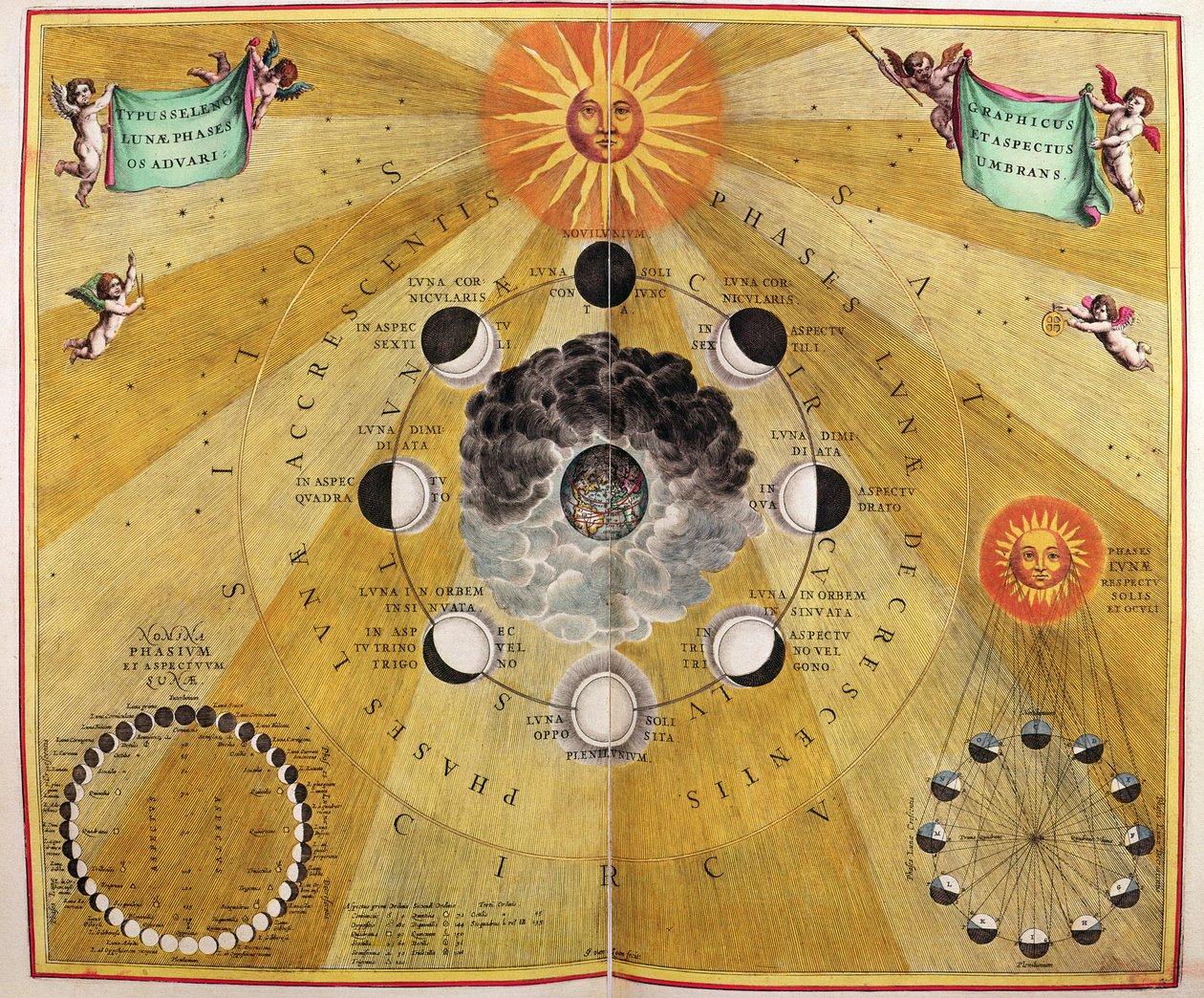
In Jyotish, the zodiac is divided into 27 regions of the sky known as Nakshatras, often translated as lunar mansions. As the Moon makes its journey around the Earth, it moves through approximately one Nakshatra each day.
Each Nakshatra carries its own mythology, symbols, planetary ruler and particular quality of energy. Together they create a much more subtle map of the sky — one that has been observed through the movement of the Moon for thousands of years.
For me, this is one of the places where Jyotish becomes especially beautiful. We move beyond simply asking, What sign is the Moon in?
We begin asking: Where, more precisely, within that part of the sky is the Moon? And what story is being told there? What aspects the psyche are being activated?
The Moon and the 27 Nakshatras The word Nakshatra refers to a star or constellation, and in Jyotish the term describes the 27 divisions along the Moon’s path through the zodiac. Each Nakshatra occupies 13°20′ of the zodiac. Each is then divided into four smaller sections called padas, each measuring 3°20′.
This gives us: 27 Nakshatras × 4 padas = 108 padas.
That number will be familiar to anyone who has spent time within the yogic traditions. There are 108 beads on a traditional mala. Mantras are often repeated 108 times. The number appears again and again within Vedic cosmology and practice. Here it is written into the architecture of the astrological sky.
A more intimate map The twelve Rashis — what we generally call zodiac signs — each occupy 30 degrees of the zodiac. But thirty degrees is a large territory. Two people can both have an Aries Moon, for example, and yet those Moons may occupy entirely different Nakshatras. Their emotional landscapes, instincts and ways of meeting life may therefore express very differently. This is one reason a Vedic birth chart becomes much richer than a simple collection of signs. The Rashi gives us one layer of the story. The Nakshatra reveals another. And within the Nakshatra, the pada takes us deeper still.
It is almost like moving from looking at a country on a map, to discovering its landscape, and then walking the particular ground beneath your feet.
Myth written into the sky What fascinates me most about the Nakshatras is that they are not simply mathematical divisions.
Each belongs to a world of myth, archetype, deity, animal, symbol and planetary energy. Ashwini, the first Nakshatra, carries the energy of movement, beginnings and healing. Rohini evokes fertility, beauty and growth. Mrigashirsha carries the image of the searching deer. Mula takes us down toward the root. Shatabhisha carries themes of healing, mystery and what is hidden. These aren't fixed personality labels. They are archetypal landscapes.
A planet placed within one of these landscapes takes on something of its atmosphere. The planet still carries its own nature, but it expresses itself through the particular terrain in which it finds itself.
This is one of the reasons I experience Jyotish less as a system of categorizing people and more as a symbolic, reflective language of Nature and psyche.
Why the Moon matters so much The Moon holds a particularly important place within Jyotish. The Sun moves through one zodiac sign over approximately a month. The Moon moves through the entire zodiac in a little less than a month, passing through approximately one Nakshatra each day.
It is continually changing. Waxing and waning. Appearing and disappearing. Moving through different regions of the night sky. And perhaps that is one reason the Moon has always been such a natural keeper of human time. Bodies, tides, fertility, planting, ritual and calendars have all been observed in relationship with lunar rhythms.
Within Jyotish, the Nakshatra occupied by the Moon at birth is therefore particularly significant. It offers another window into the instinctive and emotional nature of the individual and also provides the starting point for one of Jyotish's most remarkable systems of timing.
Nakshatras and the seasons of a life The Nakshatras are intimately connected with the Dasha system — the planetary periods that describe the changing seasons of a life. The Moon's Nakshatra at birth helps determine where the Dasha sequence begins. This means that the position of the Moon does more than describe something about our inner nature. It also becomes part of the clock.
From that first position, Jyotish follows a sequence of planetary periods unfolding across a lifetime.
Different planets come forward at different times, bringing different themes, lessons, possibilities and challenges into greater emphasis. It is another reminder that the birth chart is not static.
We are born beneath one sky, but we continue moving through time.
Learning to read the sky differently Most of us were introduced to astrology through twelve signs. There is something wonderfully simple about that doorway. But Jyotish keeps opening the map.
Twelve Rashis. Twenty-seven Nakshatras. One hundred and eight padas. Planets moving through them. The Moon tracing its path night after night.
And beneath all the mathematics is something very ancient and very human: the act of looking upward and recognizing pattern.
The Nakshatras invite us to see the sky not as an empty backdrop to our lives, but as a landscape. A landscape of cycles, stories, symbols and time.
Perhaps this is why the old Sanskrit name for astrology still feels so appropriate: *Jyotish — the science of light.*
Not because the sky tells us exactly who we must become. But because sometimes a little more light, like the Moon, illuminates the pattern we are already walking within.